


I was publishing multiple articles a week here for six and a half months. Then I stopped for two months. I’ve been deep in learning the newest agentic AI, working to understand what I can actually do with AI that carries out tasks across several steps and tools. I’m back to start sharing more of what I’m learning, and the writing is something I still have plenty to say about.
I’ve written over 70 articles with AI and spent three years cataloging the patterns I keep fixing. One particularly annoying problem shows up after I’ve given it examples of how I speak. It picks up a phrase I use and puts it somewhere I wouldn’t say it. If you’ve supplied your own writing samples and still ended up deleting familiar phrases from a draft, you can turn that deletion into an instruction for the next one.
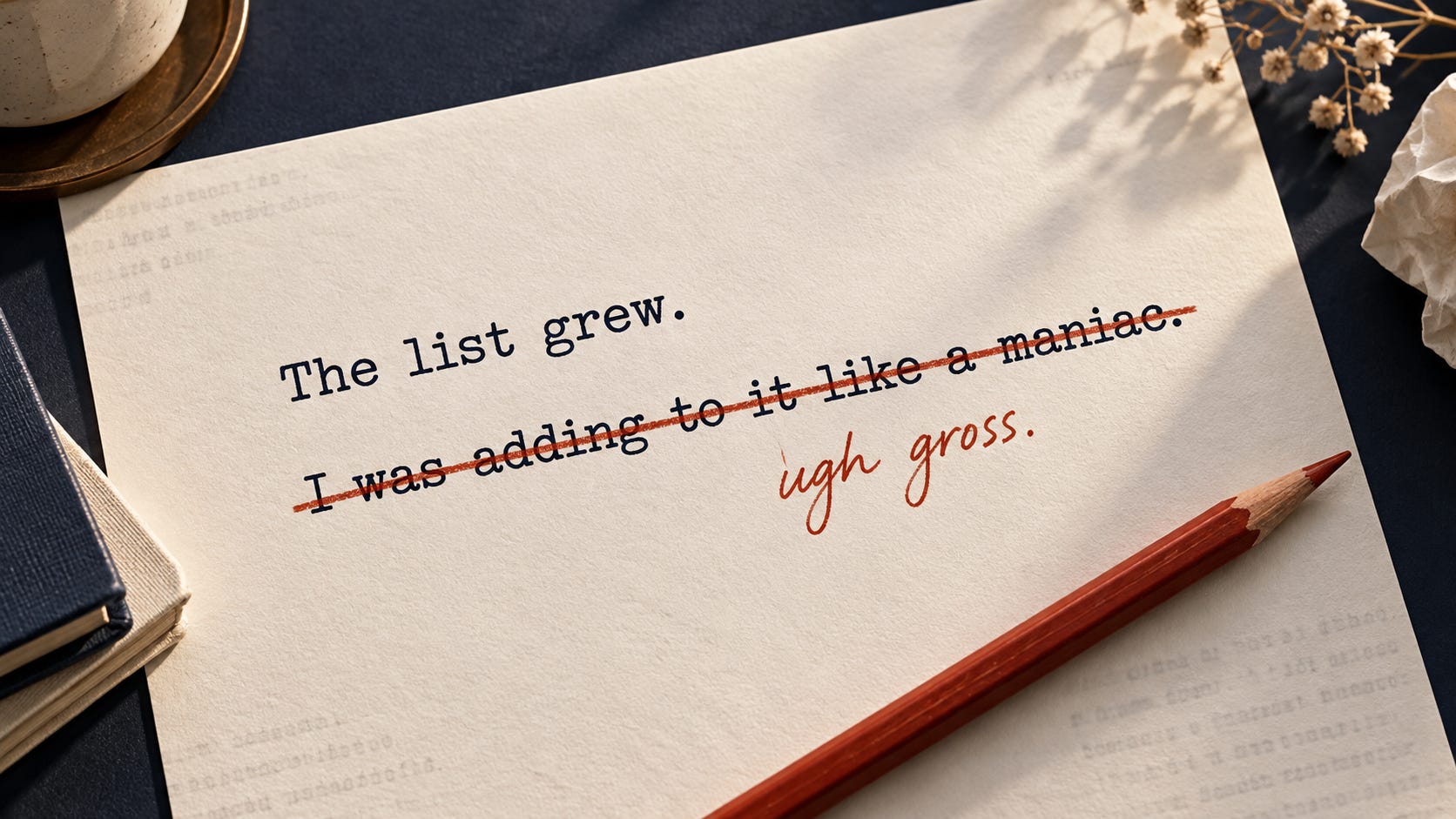
Part of my writing instructions is a vocabulary document. It records language I use and language I want AI to avoid. “Like a maniac” is in there because I actually say it. In an article about building my list of banned words, AI wrote:
The list grew. I was adding to it like a maniac.
I kept “The list grew.” The second sentence felt forced. Further down the same draft, Claude added “That’s the part that stings.” I cut that too. The paragraph already explained what had happened and how I felt about it. My reaction back to Claude was literally “ugh gross.” I’d given it both phrases as examples from my own writing because they’re things I actually say a lot. Even with that context, Claude put them in places where they felt forced, and I had to make the call to cut them.
My vocabulary document says “favor when appropriate,” and my voice rules explicitly warn against putting “maniac” in every draft. Banning it completely because of one awkward sentence in one draft would remove an expression I sometimes want. The problem I needed to name was AI inserting a familiar phrase without enough reason for it to be there.
So what is the solution?
I can turn that explanation into an instruction for the next draft. If AI is forcing your own phrases into your writing, you can try this:
Treat my vocabulary list as examples of language I use. Use a familiar phrase only when it fits what I’m saying in that passage. Check whether it repeats a point or feeling the surrounding sentences already express. Flag forced placements and suggest a deletion for my review. Preserve the original meaning.
AI can check a phrase against the surrounding paragraph and suggest where to cut. I still have to read the result, particularly when it suggests deleting something I meant to emphasize. There’s room for deliberate repetition in my writing, so I want to see what it flags and make the decision myself.
You can build an instruction like this out of an edit you’ve already made. Keep the original sentence beside your version and explain why you changed it. Be specific enough that someone else could look for the same problem. If you removed a line because the paragraph had already made the point, say that. If you changed a word because you’d never use it with your audience, give AI the word you’d use instead. The reason behind the edit tells it what to check next time.
Save the instructions that describe recurring problems in a document you give AI with your drafts. As you use them, check whether the suggested changes preserve your meaning. A rule that keeps cutting useful detail needs adjusting. Your own edits give you examples to refine it with, so the instructions can become more precise as you work.
I built my complete Writing Guardrails offer through editing sessions like these. I’d spent years identifying what felt wrong in my drafts and figuring out how to explain it to AI. I put those instructions into a framework, with a guided process for building the rules specific to someone else’s voice. The examples have to come from your writing, and the process gives you a way to work through them.
Over the last four weeks, I’ve been working with a group of people who received my Writing Guardrails. They’re publishing amazing content and seeing their engagement increase. Seeing what they’re creating with these tools made me want to get them into more people’s hands, including yours. I wanted you to have something you could use on your next piece of content, so I put together a free piece of the system for you. It’s called the First 48 Hours Quick Start. It gives you 10 patterns to look for in your AI drafts, with examples and rewrites so you can recognize what’s happening. There’s also a check you can run in ChatGPT or Claude against a piece of your own content.
If you’ve been going back and forth with AI trying to explain why a draft sounds wrong, this gives you specific things to look for and language to explain what needs changing. Get the First 48 Hours Quick Start free here and try it on something you’re working on. Keep the edits that fit what you meant to say, and use the ones you disagree with to make your instructions more precise.
I’ll be back with more on agentic AI soon.
Old system:
“Here's your company token. It works at our store.”
Modern system:
“Here's your paycheck. Please select which corporations will receive it automatically before you see it.”
Stay tuned!